Who thrives in Canada? An Examination of social factors, healthcare access, and immigration status

Authors: Sonia Anand, Shreni Patel, Scott Lear, Trevor Dummer, Vikki Ho, Jean-Claude Tardif, Jennifer Vena, Karleen Schulze, Paul Poirier, Dipika Desai, Matthias Friedrich, from the Canadian Alliance for Healthy Hearts and Minds Study. Journal: PLOS Public Health Abstract High-income countries like Canada report some of the worlds’ highest life-satisfaction levels, yet less is known about how life satisfaction varies by race and immigration status. This study investigates the factors that influence subjective well-being among 8,063 adults from the Canadian Alliance of Healthy Hearts and Minds study recruited between 2014 and 2018, including a subset of 2,142 immigrants. Measures of demographic, socioeconomic, health, healthcare access, and self-reported ethnicity were investigated in relation to self-reported life satisfaction as measured by the validated Cantril ladder score in which people were classified as suffering [1–4], struggling [5–6], or thriving [7–10]. Among 8,063 adults, approximately half were women, 18.6% were racialized, and 26.6% were immigrants. The mean life satisfaction score was 7.2 (1.4), with 71% classified as thriving. However racialized immigrants reported significantly lower life satisfaction than Canadian born non-racialized participants [6.6 (1.6) vs 7.2 (1.4); P < 0.001, and a lower proportion were classified as thriving [57% vs 73%]. In the overall sample, multivariable linear regression showed higher life satisfaction was associated with older age, male sex, having trusted neighbours, and having a language-concordant family doctor. Lower life satisfaction was associated with social disadvantage, being female, having poorer cardiovascular health, being unable to afford prescription medications, seeking care in an emergency department, and being racialized. Amongst the subset of immigrants, the life satisfaction associated factors were directionally consistent and racialized immigrants reported lower life satisfaction due to discrimination based on skin colour. Although Canada has amongst the highest life-satisfaction scores globally, the average masks persistent inequities as racialized people (especially racialized immigrants) have lower life satisfaction than non-racialized people. The findings highlight actionable levers—language-concordant primary care attachment, affordable medications, neighbourhood trust, and improved cardiometabolic health—that can be targeted to close the observed well-being gap. doi: https://doi.org/10.1371/journal.pgph.0005257


New Article – Who thrives in Canada? An Examination of social factors, healthcare access, and immigration status

Congratulations to Dr. Sonia Anand and team on their new article in PLOS Public Health, “Who Thrives in Canada: An Examination of Social Factors, Healthcare Access, and Immigration Status.” The Canadian Alliance for Healthy Hearts and Minds is a prospective cohort study designed to investigate the impact of community level factors, health behaviours and access to health services on cognitive function, subclinical vascular disease, fat distribution, and the development of chronic disease. This study investigates the factors that influence subjective well-being. In the overall sample, higher life satisfaction was associated with older age, male sex, having trusted neighbours, and having a language-concordant family doctor. Lower life satisfaction was associated with social disadvantage, being female, having poorer cardiovascular health, being unable to afford prescription medications, seeking care in an emergency department, and being racialized. Although Canada has amongst the highest life-satisfaction scores globally, the average masks persistent inequities as racialized people, and particularly racialized immigrants have lower life satisfaction than non-racialized people. The findings highlight actionable levers—language-concordant primary care attachment, affordable medications, neighbourhood trust, and improved cardiometabolic health—that can be targeted to close the observed well-being gap.

Enrichment of the Canadian Partnership for Tomorrow’s Health Study: Protocol for Administering Multiple Online Dietary and Movement Behavior Assessment Tools in a Longitudinal Cohort Study

Authors: Rachel Murphy, Jennifer Vena, Alyssa Milano, Guy Faulkner, Benoit Lamarche, Charles Matthews, Leia Minaker, Dylan Spicker, Ellen Sweeney, Michael Wallace, Michael Widener, Sharon Kirkpatrick Journal: JMIR Research Protocols Abstract Background: Suboptimal diet quality and physical inactivity are key risk factors for chronic disease and disability in Canada. However, the lack of high-quality population-level data hinders the development of evidence-based strategies to support improvements in diet quality, movement behaviors (physical inactivity, activity, and sleep), and health. The lack of data is also a barrier to developing capacity in diet and physical activity assessment and epidemiology in Canada. Objective: This protocol describes the development of the largest known repository of dietary intake and movement behavior data in Canada by drawing upon an existing longitudinal cohort study, the Canadian Partnership for Tomorrow’s Health (CanPath). In the short-term, the data will be used to examine associations between system factors (eg, retail food environments) and dietary intake. In the longer-term, data will be available to pursue a range of research questions, including longitudinal associations between diet, movement behavior, and health outcomes. Methods: Participants in CanPath (>330,000 adults) who can complete online questionnaires are eligible and will be asked to complete a baseline web-based questionnaire including questions on demographic characteristics and screeners capturing dietary intake and movement behaviors. Subsequently, participants will be invited to complete an online 24-hour dietary recall using the Automated Self-Administered 24-Hour Dietary Assessment Tool (ASA24-Canada-2018) and an online 24-hour activity recall using Activities Completed Over Time in 24 Hours (ACT24). Repeat recalls will be administered 1-2 weeks later. A subset of participants will be invited to complete 2 additional ASA24-Canada-2018 and Activities Completed Over Time in 24 Hours recalls 6 months later. One year after baseline, participants will be invited to complete past-year diet and movement behavior questionnaires. In Québec, dietary intake and movement behavior data are from 3000 CanPath participants enrolled in the NutriQuébec study. Participant addresses will be linked to geospatial data on the food, built, and social environment. Results: Data collection began in 2025. As of manuscript acceptance (November 4, 2025), 3171 participants had been recruited. Data processing and cleaning will be completed in 2027, and analyses will occur in 2028. It is anticipated that dietary intake and movement behavior data will be available for up to 100,000 adults. Conclusions: This protocol outlines the collection of detailed data on dietary intake and movement behavior in a large cohort spanning all provinces in Canada. In addition to allowing examination of a range of research questions related to diet, movement behavior, and health, the combination of assessment tools will support methodological research, including expanding analytical strategies to mitigate the effects of error in dietary and movement behavior data. This effort will also build capacity in the collection, processing, and harmonization of dietary and movement behavior data among cohorts and provide a training ground for emerging researchers. doi:10.2196/71680

New Article – Enrichment of the Canadian Partnership for Tomorrow’s Health Study: Protocol for Administering Multiple Online Dietary and Movement Behavior Assessment Tools in a Longitudinal Cohort Study

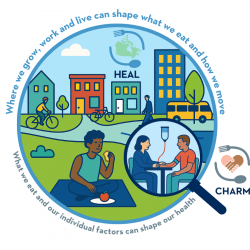
Congratulations to Dr. Rachel Murphy and team on their new article, “Enrichment of the Canadian Partnership for Tomorrow’s Health Study: Protocol for Administering Multiple Online Dietary and Movement Behavior Assessment Tools in a Longitudinal Cohort Study.” This protocol describes the development of the largest known repository of dietary intake and movement behavior data in Canada by drawing upon an existing longitudinal cohort study, the Canadian Partnership for Tomorrow’s Health (CanPath). In the short-term, the data will be used to examine associations between system factors (e.g., retail food environments) and dietary intake. In the longer-term, data will be available to pursue a range of research questions, including longitudinal associations between diet, movement behavior, and health outcomes. This work is part of the HEAL (HEALthy Eating and Supportive Environments) study that aims to reach 100,000 participants across all seven regional cohorts representing ten provinces.

CanPath Prairie Cohorts

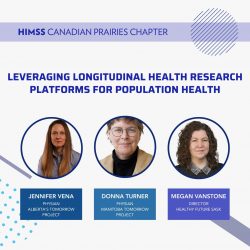
The Healthcare Information and Management Systems Society’s Prairie Chapter has an upcoming webinar on Leveraging Longitudinal Health Research Platforms for Population Health is coming up on December 9, 2025. Join our CanPath colleagues from Alberta’s Tomorrow Project, Healthy Future Sask and the Manitoba Tomorrow Project as they share how Prairie-based cohort studies are transforming population health research. 🔍 You’ll explore:✅ Digital health surveys and administrative data linkage✅ Data harmonization for cross-jurisdictional research✅ Real-world applications in chronic disease surveillance✅ Collaboration opportunities for evidence-based decision-making 👥 Featuring speakers:• Dr. Jennifer Vena – Scientific Director, Alberta’s Tomorrow Project• Dr. Donna Turner – Provincial Director, Population Oncology, CancerCare Manitoba• Megan Vanstone – Director of Research Development & Strategy, Saskatchewan Cancer Agency Don’t miss this opportunity to gain valuable insights into longitudinal health data for population health innovation. 📅 December 9, 2025 | Webinar 🔗 Register now: https://lnkd.in/gDVBY7Hz

CanPath at CCRC 2025: Connection, collaboration, and cancer research across Canada

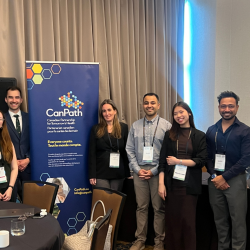
More than 1,300 people came together in Calgary for the Canadian Cancer Research Conference (CCRC) 2025, creating an inspiring atmosphere of ideas, energy, and community. For CanPath and our regional cohorts, the meeting is one of the few times each year when our pan-Canadian team gathers in person to learn from one another, support our colleagues, and reflect on the collective impact we’re making on cancer research across the country. This year’s conference highlighted just how interconnected our work has become. From poster sessions and oral presentations to hallway conversations and hands-on training, CanPath-supported research was visible across disciplines, regions, and career stages. Learn more: https://canpath.ca/2025/11/canpath-at-ccrc-2025-recap/

Participant Town Hall – Nov 17th

There are only three more days before the upcoming Atlantic PATH and CanPath Participant Town Hall! There is still time to register! On Monday, November 17th, you can learn about how we are “Preventing Cancer, Together: How your Data is Driving Discoveries.” Join us at the Town Hall to learn how the data and biological samples provided by our participants are used to study cancer and chronic disease and support exciting scientific discoveries. When: Monday, November 17, 2025 1-230pm Atlantic Time Where: Online Zoom Meeting Watch your email inbox for an invitation and additional details! If you have changed your contact information, please reach out: https://www.atlanticpath.ca/index.php/contact-us/ You can also register here (http://bit.ly/4nRdVHh) and submit your questions to be answered during our panel discussion. Please note, the webinar will be recorded and shared afterwards on YouTube.

Participant Town Hall – Nov 17

Don’t miss out on the upcoming Atlantic PATH and CanPath Participant Town Hall! On Monday, November 17th, you can learn about how we are “Preventing Cancer, Together: How your Data is Driving Discoveries.” Join us at the Town Hall to learn how the data and biological samples provided by our participants are used to study cancer and chronic disease and support exciting scientific discoveries.When: Monday, November 17, 20251-230pm Atlantic TimeWhere: Online Zoom Meeting Watch your email inbox for an invitation and additional details! If you have changed your contact information, please reach out: https://www.atlanticpath.ca/index.php/contact-us/ You can also register here (http://bit.ly/4nRdVHh) and submit your questions to be answered during our panel discussion. Please note, the webinar will be recorded and shared afterwards on YouTube.

World Diabetes Day 2025

This year’s World Health Organization World Diabetes Day “recognizes that every person living with diabetes should have access to integrated care, supportive environments and policies that promote health, dignity and self-management. This campaign emphasizes the importance of a life-course approach to diabetes prevention, management and overall well-being.  World Diabetes Day provides an opportunity to raise awareness about diabetes as a critical global public health issue. Join us in raising awareness, spreading knowledge and creating lasting change for all affected by diabetes.” Data and biological samples provided by Atlantic PATH participants are being used in important diabetes research, including work by Dr. Roger McLeod and Dr. Vanessa DeClercq. Their research explored the relationship between adiponectin and apoB in participants with a history of diabetes in the Atlantic PATH cohort. Learn more: https://bit.ly/4oiwlks

Meet the HEAL & CHARM Team

The HEAL and CHARM studies bring together an incredible team of researchers, coordinators, and collaborators from across Canada, all working to better understand how our diet, activity, and environments shape health and equity. The HEAL (HEALthy Eating and Supportive Environments) study is the  largest study on diet and physical activity in Canada! Atlantic PATH participants will receive an invitation to join the HEAL study, and what you share will help researchers understand how we eat, move, and live, leaving a legacy that will guide future health research, programs, and policies across Canada. Your participation matters. Each response helps build a foundation for healthier communities — now and for generations to come.  Team members answered “What aspects of the HEAL and CHARM studies are currently the most exciting or rewarding for you to work on?” Here’s what they had to say. https://canpath.ca/2025/11/meet-the-heal-and-charm-teams/