Webinar: Building the Canadian Cancer Society within CanPath

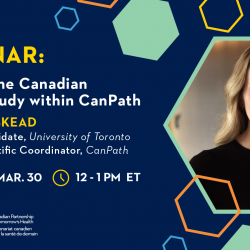
Join us on March 30th (1-2pm AST/12-1pm EST) for the CanPath webinar, “Building the Canadian Cancer Society within CanPath.” Registration: http://bit.ly/3JdYhCR About the webinar: Streams of big data are finally coming together to help us understand cancer and predict it earlier. CanPath is building the Canadian Cancer Study to advance research and discovery for cancer, the leading cause of death in Canada. As the first program to bring together national population health cohort resources with administrative-level data and provincial cancer registry data in one central location, CanPath is reducing barriers and increasing data accessibility to advance Canadian cancer research. Researchers will be able to access a ready-made dataset that would otherwise take them a year or more to bring together since they would have to compile it themselves by contacting each provincial data holder for the same information. The Canadian Cancer Study is ultimately paving the path to understanding the needs of people with cancer by leveraging the full potential of large data sources. Join the webinar to learn about progress towards building the Canadian Cancer Study, and how CanPath data and biologics, coupled with linked clinical outcomes can be used to identify biological signatures associated with increased cancer risk and, subsequently, develop novel early diagnostic tools able to identify cancer years prior to clinical onset. About the presenter: Our colleague, Kimberly Skead is a doctoral candidate in the Department of Molecular Genetics at the University of Toronto and the Ontario Institute for Cancer Research where she is developing tools to identify patients at risk of cancer and heart disease. She completed a BSc at Trinity College in the University of Toronto where she studied Global Health and Genome Biology. Kimberly is the National Scientific Coordinator of the Canadian Partnership for Tomorrow’s Health, the Program Coordinator for the Canadian Data Integration Centre and the co-founder and co-leader of the Ontario Rising Stars in Cancer Research Network. She is the recipient of the Frederick Banting and Charles Best Canada Masters and Doctoral Scholarships from the Canadian Institutes for Health Research, and the Cecil Yip Doctoral Research Award.  

New Research Report — Current Management and Health Care use for People with Osteoarthritis

Congratulations to Dr. Cheryl Kozey and team on their completed study and new report, Current Management and Health Care Use for People with Osteoarthritis. The team used existing data from Atlantic PATH to examine self-reported characteristics of people living with and without osteoarthritis in all three Maritime Provinces (New Brunswick, Nova Scotia and Prince Edward Island).  The Atlantic PATH data for Nova Scotians was then linked to administrative data, accessed through Health Data Nova Scotia, in order to identify trends in health care use by Nova Scotians with and without osteoarthritis. A copy of the summary report can be found here: https://mssu.ca/wp-content/uploads/2023/02/OA-Maritimes-Summary-Report_2023-02-10.pdf An infographic characterizing the the participants and findings can be found here: https://mssu.ca/wp-content/uploads/2023/02/OA-Maritimes-Infographic.pdf

Nearing PhD Defense

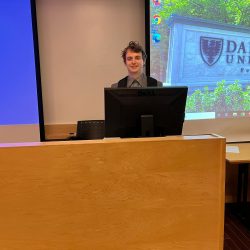
Congratulations to Jacob Nearing who successfully defended his PhD in Microbiology and Immunology at Dalhousie University!! Supervised by Dr. Morgan Langille, Jacob used biosamples from Atlantic PATH and Alberta’s Tomorrow Project in his work, “Identification of Robust Biomarkers Using Microbiome DNA Sequencing with a Focus on the Oral Microbiome and Cancer Associations.” Abstract The human microbiome can be defined as the community of microbes that live within and on the human body. Modern day microbiome research relies on the use of high throughput deoxyribonucleic acid (DNA) sequencing to characterize and identify microbes and community structures associated with human disease. Indeed, the human microbiome has been proposed as a useful source of biomarkers for numerous human health conditions including cancer. Yet often, microbial biomarkers identified through DNA sequencing efforts are not reproducible between studies. Herein, I present my work on examining computation choices during microbiome experiments and applying this knowledge to identify novel associations with the salivary microbiome and breast, prostate, and colon cancer. Typical DNA sequenced based surveys of microbiomes, requires numerous choices to be made at each step of the experimental protocol. Often theses choices are unclear with no current gold standard within the field. Yet, these methods are used interchangeable within the literature without regard for how that choice might impact the biological conclusions that researchers find. To help address this issue I examined how choices made during two computational steps for processing DNA sequencing data impacted the biological conclusions drawn. In doing so I highlighted critical differences that can be attributed to bioinformatic tool choice and suggest potential solutions for these issues in the future. Using information from the above chapters, the second half of this thesis represents analysis done on salivary samples from a large population cohort to both characterized salivary microbiome variation and how that variation is associated with breast, prostate, and colon cancer. Within these chapters we show that several daily life factors are significantly associated with salivary microbiome composition, yet they only explain a small amount of total community variance. We also show that the salivary microbiome contains little signal in cases of breast and prostate cancer. Contrastingly our work did show potential salivary microbiome associations within cases of colon cancer. These findings show the potential for future diagnostic research into the relation between the oral microbiome and colon cancer development. Jacob’s publications and additional information about his research can be found here. Congratulations, Dr. Nearing!! We wish you all the best in the future and look forward to following your career.  

Prostate Cancer Awareness Month Logo

CanPath Research Round-Up: Prostate Cancer Awareness

For September 2022’s #ProstateCancerAwarenessMonth, we shared insights across our social media channels from prostate cancer studies by CanPath researchers. Thanks to rich data from over 330,000 volunteer participants and researchers’ efforts, we can help change the future of prostate cancer! CanPath’s Research Round-Up highlights work on prostate cancer from Atlantic PATH and collaborators using our questionnaire data and toenail samples! https://canpath.ca/2022/11/prostate-cancer-awareness-month/  

Prostate Cancer Awareness Month

This #ProstateCancerAwarenessMonth, we’re sharing insights from recent studies from researchers across Canada. Today, we’re sharing findings from Sheida Majouni, PhD candidate from Dalhousie University! In 2022, Majouni and colleagues applied machine learning to arsenic species and metal profiles of toenails from Atlantic PATH. They aimed to understand environmental metal’s potential to produce disease, specifically prostate cancer: https://bit.ly/3eVjUMK “Artificial intelligence has a unique potential to revolutionize population health,” says Dr. Syed Sibte Raza Abidi, Professor in the Faculty of Computer Science at Dalhousie University. “By discovering environmental risk factors’ influence on chronic disease risk with risk prediction models, it is a pivotal tool for mitigating the risk of chronic disease onset.” This work is being expanded with the support of a New Frontiers in Research Fund (NFRF) Exploration grant. Team members include Dr. Syed Sibte Raza Abidi (Nominated Principal Investigator), Dr. Jong Sung Kim (Co-Principal Investigator), Dr. Ellen Sweeney (Co-Investigator), Dr. Gabriela Ilie (Co-Investigator), Dr. Trevor Dummer (Co-Investigator), Dr. Taehyun Roh (Collaborator), Dr. Nathalie Saint-Jacques (Collaborator), and Jason Hicks (Collaborator). Watch this space for future findings!

New Publication

Congratulations to Majouni et al. on the new publication, “Applying Machine Learning to Arsenic Species and Metallomics Profiles of Toenails to Evaluate Associations of Environmental Arsenic with Incident Cancer Cases.” This research involves analyzing toenail samples from Atlantic PATH, as well as machine learning algorithms to arsenic species and metallomics profiles to investigate the complex association between environmental arsenic as a carcinogen and prostate cancer. https://ebooks.iospress.nl/doi/10.3233/SHTI220385  

Funding News

Congratulations to Dr. Samina Abidi, Dr. Raza Abidi, Dr. Ellen Sweeney and team on their successful CIHR Catalyst grant, “Digital Health and Artificial Intelligence based Platform for Early Chronic Disease Risk Assessment and Prediction to Improve Population Health.”  This project will leverage digital health/e-health and artificial intelligence technologies to develop a Personalized Risk Investigation, Stratification and Mitigation (PRISM) platform to assess chronic disease risk. “

Five Years of Team PATH and Plaid for Dad

The Atlantic PATH team is always happy to support the Canadian Cancer Society’s Plaid for Dad event which raises awareness about prostate cancer and supports prostate cancer research in Canada. There were two years when we could be together for Plaid for Dad in the office and with our office dog Flash. We’re happy to be able to continue participating while we work from home during COVID-19 the past few years, safely social distancing! You can read more about the Plaid for Dad campaign here: https://bit.ly/3QrMbZC                            

Congratulations to Dr. Robin Urquhart and the CanPath team across the country!

Funded by the Canadian Cancer Society Data Transformation Grant, this work will connect cancer registry and administrative health data with CanPath data creating a unified resource for cancer research in Canada. https://bit.ly/3OojlZ2 Urquhart R, Awadalla P, Bhatti P, Dummer T, Gravel S, Vena J, Alvi R, Broet P, Kendell C, Kirsh V, Lettre G, Skead K, Sweeney E, Turner D. Harnessing the power of linked data to understand cancer and its outcomes: a national linkage project. March 2022-March 2023, CCS Data Transformation Grant. Canada has a wealth of health care and health research data, but numerous barriers prevent efficient sharing of these datasets between provinces. This, combined with further difficulties with linking datasets together, causes major limitations in using the data productively to improve the health of Canadians. With support from the Canadian Cancer Society, Dr Urquhart will lead a team to connect several cancer registry and administrative health data repositories, creating a unified resource for cancer research in Canada. One of the datasets, CanPath, contains data on 1 in 100 Canadians, including lifestyle, family histories, genetics and environment and this, combined with other datasets, will be analysed to understand the causes of cancer and what happens to people with cancer in the short- and long-term. The researchers will also be able to ask important questions about the impact of the COVID-19 pandemic on people who have been diagnosed with cancer during this time. Linking these huge datasets will provide a very important resource for cancer research in Canada.