
CanPath and Regional Cohorts at the Canadian Cancer Research Conference (#CCRC2023)

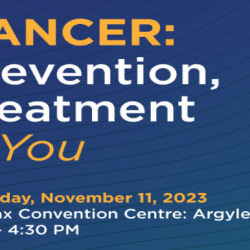
CanPath and its regional cohorts will be well represented at the upcoming Canadian Cancer Research Conference in Halifax on November 11-14th. This conference is hosted by the Canadian Cancer Research Alliance. It brings together the Canadian cancer research community and spans the research spectrum.   We’re pleased to have attendees from the CanPath National Coordinating Centre and regional cohorts including Atlantic PATH, CARTaGENE (Quebec), the Ontario Health Study, the Manitoba Tomorrow Project, Alberta’s Tomorrow Project, and the BC Generations Project.   Over the next two weeks, we will share more details about where to find CanPath and regional cohort representatives at the conference (e.g., plenaries, concurrent and lightning sessions, poster presentations, etc.), as well as researchers who have used data and biological samples from CanPath and the regional cohorts. Stay tuned! 

World Mental Health Day

October 10th is World Mental Health Day and Atlantic PATH is pleased to be involved in multiple studies examining mental health and well-being. COVID Global Mental Health Consortium The COVID Global Mental Health Consortium was recently funded and includes 23 global cohorts representing 2.8 million participants. It will produce a global evaluation of pandemic-related mental health outcomes using individual-level harmonized longitudinal data. Research will begin this fall and we look forward to participating and contributing to this important work. Depression, Anxiety and Risk of Cancer Depression and anxiety have long been thought to be related to an increased cancer risk. The Psychosocial Factors and Cancer Incidence (PSY-CA) consortium is led from the Netherlands and includes Atlantic PATH, CARTaGENE (Quebec) and the Ontario Health Study. This study found that mental health was not related to an increased risk of cancer. Shift Work & Mental Health The relationship between mental health and shift work was evaluated among Atlantic PATH participants. Shift workers reported higher levels of each of the mental health domains compared to non-shift workers. Shift workers were more likely to have increased rates of depression and poor self-rated health, as well as depressive and anxiety symptom scores compared to non-shift workers. As a result, shift workers may be at increased risk of comorbidity, poor quality of life, missed work, and early retirement. Physical Activity and Self-Rated Health The population of Atlantic Canada is aging rapidly and has among the highest rates of chronic disease in the country. This study examined the association between physical activity and self-rated health among Atlantic PATH participants. The results suggest that physical activity is associated with and may help to improve perceived health status of individuals with one or more chronic conditions. The findings support literature suggesting that physical activity can be beneficial for adults as they age with chronic disease. Anxiety, Depression and Prostate Cancer Prostate cancer is the most prevalent form of cancer among males in Canada, and has one of the most favorable survival rates among all cancers. The incidence rates are expected to remain high with an aging population and an increase in asymptomatic detection. Prostate cancer survivors had higher odds of anxiety or depression symptoms compared to those with no history of cancer or a history of any other type of cancer. Prostate cancer survivors with a low household income had a higher rate of depression compared to those  with a history of another type of cancer and a high household income. Prostate cancer survivors who were treated with surgery had a higher odds of depression symptoms compared to those with a history of other types of cancer. Increased rates of anxiety and depression among males with a history of prostate cancer highlights the need for mental health screening among prostate cancer survivors. The findings highlight the importance of a multidisciplinary effort to prioritize and deliver comprehensive mental health support throughout the prostate cancer journey.  

Webinar: Using CanPath to Support Innovative Health Research 

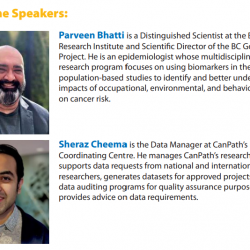
Using CanPath to Support Innovative Health Research  Join our colleagues, Dr. Parveen Bhatti (Scientific Director, BC Generations) and Sheraz Cheema (Data Manager, CanPath) on Wednesday, October 11th to learn about CanPath, types of questions the data can be used to address, and how the data can be accessed. Registration: https://t.co/m8PU92M881  

CanPath Newsletter – Fall 2023

CanPath has released its Fall 2023 newsletter! You can see updates from CanPath and its regional cohorts: CanPath News September 2023 – Nouvelles CanPath septembre 2023 (mailchi.mp). Updates from Atlantic PATH include:  Attending and presenting at the Canadian Society for Epidemiology and Biostatistics (CSEB) Conference held in Halifax in June 2023. CanPath joining the COVID Global Mental Health Consortium that includes 23 international population health cohorts with more than 2.8 million participants! Researchers will work to address critical knowledge gaps related to the impact of policy, psychological and social factors on mental health during the COVID-19 pandemic.”This is an excellent opportunity for CanPath to be involved in such a large international mental health collective,” says Dr. Ellen Sweeney, Director of Research at Atlantic PATH. “We’re very fortunate to have engaged and enthusiastic participants from our regional cohorts, and more than 100,000 participants provided questionnaire data during the COVID-19 pandemic. The work of the COVID Global Mental Health Consortium will be impactful, and we’re thrilled to participate and contribute to this important research.” Atlantic PATH will lead and represent CanPath in this consortium, with analyses for CanPath being conducted in-house by Atlantic PATH’s Data Analyst, Yunsong Cui.   Regional updates including three new publications Congratulations to Dr. Lonneke van Tuijl, Dr. Joost Dekker and team on their new publication with the first results from the Psychosocial Factors and Cancer Incidence (PSY-CA) consortium. This study includes 18 cohorts with more than 300,000 participants, including Atlantic PATH, the Ontario Health Study and CARTaGENE. Congratulations to Dr. Ivan Litvinov, Dr. François Lagacé and the team at McGill University on their new publication from the SunFit project. This study included Atlantic PATH participants and considered why Atlantic Canadians are at higher risk for developing melanoma. Congratulations to Kalli Hood and the team at Dalhousie University on their new publication. Kalli’s Master’s research found an association between a history of cancer and arsenic speciation/metallome exposure in the Atlantic PATH cohort. This work is part of its larger focus on environmental exposure and cancer risk and the use of toenails as an important biomarker.

CITF COVID-19 Immunity Task Force Databank

CanPath and its regional cohorts, including Atlantic PATH, are proud to be part of the COVID-19 Immunity Task Force (CITF) Databank with our COVID-19 serology study that includes participants across the country. The CITF Databank data holdings include data from 21 studies, including six multi-province studies “representing a wide range of population and community data from various regions of Canada. Access is free and open to researchers everywhere.” Details: https://www.covid19immunitytaskforce.ca/citf-databank/

Upcoming Webinar: Empowering Breast Health: Personalized Approaches to Canadian Breast Cancer Screening

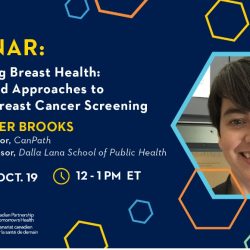
Join CanPath for an upcoming webinar from CanPath’s incoming Executive Director, Dr. Jennifer Brooks entitled, “Empowering Breast Health: Personalized Approaches to Canadian Breast Cancer Screening” on  Thursday, October 19th from 12-1pmEST/1-2pmAST. Details and registration info: https://canpath.ca/2023/09/webinar-breast-cancer-screening-brooks/

CanPath is Hiring: Research Operations Manager

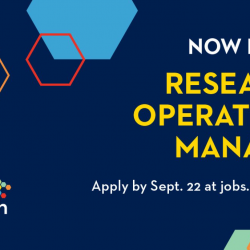
Join the CanPath team as the new Research Operations Manager at the University of Toronto. Deadline: September 22, 2023. “CanPath is Canada’s largest population health cohort and a national platform for population-level health research. CanPath is studying the biology, behaviours and environments of Canadians to learn more about the causes of chronic disease and cancer for the good of our country and people around the world. As the CanPath Research Operations Manager, you will be integral to maximizing research funding, which includes conducting detailed analysis and applying and interpreting relevant policies. You will be responsible for directing the activities of a group of staff and therefore will be working together to drive CanPath’s objectives. Using your analytical, communication and problem-solving skills, you will support and collaborate with a diverse set of stakeholders and partners in applying and interpreting policies and procedures, policy issues, and drafting contracts and agreements.” Details: https://jobs.utoronto.ca/job/Toronto-CanPath-Research-Operations-Manager-ON/573838317/  

CanPath Scientific Director presents at AGBT Meeting

Advances in Genome Biology and Technology (AGBT) is “considered the preeminent genome science and technology conference where top global researchers, leaders and innovators meet to announce new discoveries, cutting edge breakthroughs and to collaborate.” CanPath Scientific Director, Dr. Philip Awadalla attended the AGBT Precision Health meeting in San Diego, California from September 7-9, 2023. Dr. Awadalla was a panelist speaking about The Great Debate, Genetics, Environment, and Health, alongside Dr. Gary Miller (Columbia University) and Dr. Alison Motsinger-Reif (National Institute of Environmental Health Sciences).

New Publication – Depression, Anxiety and Risk of Cancer

We are pleased to share that the first results from the Psychosocial Factors and Cancer Incidence (PSY-CA) consortium have been published in Cancer. Led from the Netherlands by Dr. Lonneke van Tuijl and Dr. Joost Dekker, this study includes 18 cohorts with more than 300,000 participants including Atlantic PATH, the Ontario Health Study and CARTaGENE from CanPath. Our local team members include Mr. Yunsong Cui (Atlantic PATH) who completed all local analyses, Dr. Ellen Sweeney (Atlantic PATH) and Dr. Melanie Keats (Dalhousie University). Depression and anxiety have long been hypothesized to be related to an increased cancer risk, but, to date, findings are inconclusive. Individual participant data meta-analyses were performed within the PSY-CA consortium to assess the associations between depression, anxiety, and the incidence of various cancer types (overall, breast, lung, prostate, colorectal, alcohol-related, and smoking-related cancers). Findings from the study indicate that depression and anxiety are not related to increased risk for most cancer outcomes, except for lung and smoking-related cancers. This study shows that key covariates are likely to explain the relationship between depression, anxiety, and lung and smoking-related cancers. Link to publication: https://acsjournals.onlinelibrary.wiley.com/doi/10.1002/cncr.34853 Link to Neuroscience News article: https://neurosciencenews.com/depression-anxiety-cancer-23769/    

COVID Global Mental Health Consortium Funded – 23 cohorts with 2.8 million participants

We’re excited to share that the collaborative project, “International Evaluation of Modifiable Social Determinants of Health on COVID-related Mental Health Outcomes” has been approved for funding from the National Institute of Mental Health (Mental Health Research Grant, award number 1RF1MH134638-01). Led by Dr. Jordan Smoller (Harvard University, Massachusetts General Hospital), Dr. Sarah Bauermeister (University of Oxford), and Dr. André Russowsky Brunoni (University of Sao Paulo), the COVID Global Mental Health Consortium (CGMHC) will produce a global evaluation of pandemic-related mental health outcomes using individual-level harmonized longitudinal data. The CGHMC is comprised of 23 global cohorts representing 2.8 million participants.1  This work will address critical knowledge gaps related to the impact of policy, psychological and social factors on mental health in the COVID-19 pandemic. 2 We look forward to participating in the CGHMC and contributing to this important research.   1 CGMHC cohorts include CanPath, Health and Retirement Study, Brains for Dementia Research, English Longitudinal Study of Ageing, National Study of Health and Development, Oxwell, Generation Scotland, UK Biobank, Igana Mayuge Health and Demographic Surveillance Site, Adolescent Brain Cognitive Development Study, All of Us, Einstein Study, Mass Gen Brigham Biobank, Study to Assess Risk and Resilience in Service Members Longitudinal Study, COVID-19 Mental Health Survey, FinnGen, Taiwan Biobank, University of College London COVID Study, The Irish Longitudinal Study on Ageing, COVIDMENT, Qatar Biobank, Brazilian High Risk Cohort Study, and the Brazilian Longitudinal Study of Adult Health (ELSA). 2 CanPath was represented on this application by Dr. Ellen Sweeney, Dr. Philip Awadalla, Dr. Robin Urquhart, and Mr. Yunsong Cui. Atlantic PATH is pleased to lead this work on behalf of CanPath.