
Dr. Robin Urquhart at #CCRC2023

Dr. Robin Urquhart is the co-chair of the Scientific Program Committee at the Canadian Cancer Research Conference. She is also the Scientific Director of Atlantic PATH; Canadian Cancer Society (Nova Scotia Division) Endowed Chair in Population Cancer Research; Associate Professor, Department of Community Health and Epidemiology, Dalhousie University; Senior Scientist, Beatrice Hunter Cancer Research Institute; and Affiliate Scientist, Nova Scotia Health. Dr. Urquhart’s research interests include access to and quality of cancer care, patient and family outcomes and experiences, and how to more effectively move research evidence into clinical practice and healthcare policy.   During the conference, Dr. Urquhart can be found:  At the Opening Remarks (Sunday, November 12th, 9am AST)  Chairing a session on the Crises Affecting Healthcare (Monday, November 13th at 11:40am AST)  At the Patient Engagement Workshop (Monday, November 13th at 4:40pm AST)  Chairing a session on environment and cancer with Patient Partner, Dr. Don Desserud (Tuesday, November 14th at 11:40am AST).   
Dr. Philip Awadalla represents CanPath at #CCRC2023

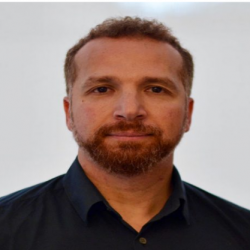
CanPath Scientific Director, Dr. Philip Awadalla, will represent CanPath at the Canadian Cancer Research Conference. Dr. Awadalla is also the Director of Computational Biology and Senior Investigator at the Ontario Institute for Cancer Research, Professor of Population and Medical Genomics at the University of Toronto, and Executive Director of the Ontario Health Study. His research interests include the development of genomics approaches, model-based tools, and population-based approaches to study mutation rates, genome biology, and cancer.   Along with Patient Partner and Atlantic PATH participant, Pauline McIntyre, Dr. Awadalla will chair a panel on CanPath: Canada’s Largest Population Laboratory for Cancer Research on Monday, November 13th at 11:40 AST. Presenters include    Dr. Dylan O’Sullivan (Alberta Health Services, University of Calgary) speaking about risk factors for early-onset colorectal cancer;  Dr. Samina Abidi (Dalhousie University) speaking about a digital health and artificial-based public health platform for cancer risk prediction;  Dr. Sara Nejatinamini (Alberta Tomorrow Project, Alberta Health Services) speaking about changes in breast and cervical cancer screening during the COVID-19 pandemic; and   Dr. Vikki Ho (University of Montreal, CARTaGENE) speaking about harnessing data to build a cancer prevention research program.  Dr. Awadalla will also represent CanPath on a panel chaired by Dr. Sherri Christian on Networked Cancer Research in Canada on Tuesday, November 14th at 9:00am AST.   

New Publication – PTSD and Ovarian Hormones

Congratulations to Dr. Ashlyn Swift-Gallant and team on their new publication in the Journal of Psychiatric Research, “Evidence that ovarian hormones, but not diet and exercise, contribute to the sex disparity in post-traumatic stress disorder.” Dr. Swift-Gallant’s research used questionnaire data from Atlantic PATH participants. Free 50 day access: https://bit.ly/46SNDft Dr. Swift-Gallant is based in the Department of Psychology at Memorial University in Newfoundland and Labrador. Their research examines the role hormones play in the development of the brain and behaviour with the overall goal of understanding how individual differences develop.

Canadian Cancer Research Conference Community Event

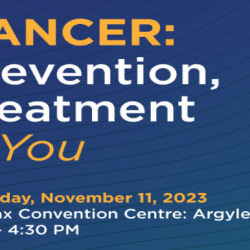
CanPath and Atlantic PATH are excited to participate in the upcoming Community Event, “Cancer: Prevention, Treatment & You” at the Canadian Cancer Research Conference. Our team members are looking forward to meeting you!   Megan Fleming, Communications and Knowledge Translation Officer, CanPath  Jason Hicks, Executive Director, Atlantic PATH   Ellen Sweeney, Research Director, Atlantic PATH  This free event is open to the public:  Explore an exhibit hall with resources for people of all ages  Speak one-on-one with patient advocates  Learn about risk reduction  Get up-to-date information on screening and treatment, as well as helpful advice on life after a cancer diagnosis   Panel: Moderated by Eilish Bonang, Anchor of Global Morning News in Halifax, you will hear about interesting research from:  Dr. Nathalie Saint-Jacques, MSc, PhD, Senior Epidemiologist, Nova Scotia Health Cancer Care Program  Dr Michael N. Ha, MD, PhD, FRCPC, Radiation Oncologist, Nova Scotia Health  Mr. Tom Christensen, MSc, Clinical Exercise Physiologist (CSEP-CEP), Physical Activity and Cancer (PAC) Lab   Details:   Saturday, November 11th   1:30-4:30pm AST  Halifax Convention Centre: Argyle Suite  1650 Argyle Street, Halifax 

CanPath and Regional Cohorts at the Canadian Cancer Research Conference (#CCRC2023)

CanPath and its regional cohorts will be well represented at the upcoming Canadian Cancer Research Conference in Halifax on November 11-14th. This conference is hosted by the Canadian Cancer Research Alliance. It brings together the Canadian cancer research community and spans the research spectrum.   We’re pleased to have attendees from the CanPath National Coordinating Centre and regional cohorts including Atlantic PATH, CARTaGENE (Quebec), the Ontario Health Study, the Manitoba Tomorrow Project, Alberta’s Tomorrow Project, and the BC Generations Project.   Over the next two weeks, we will share more details about where to find CanPath and regional cohort representatives at the conference (e.g., plenaries, concurrent and lightning sessions, poster presentations, etc.), as well as researchers who have used data and biological samples from CanPath and the regional cohorts. Stay tuned! 

The sunscreen paradox: McGill University researchers warn of ‘false sense of security’

The sunscreen paradox: McGill University researchers warn of ‘false sense of security’ “Sunscreen is important, says Dr. Ivan Litvinov, but it is also the least effective way to protect your skin when compared to sun protective clothing and sun avoidance.” “Sunscreen usage is climbing, but so are melanoma and skin cancer rates: this, researchers say, is the sunscreen paradox. The problem is that people use sunscreen as a ‘permission slip’ to tan,” said Dr. Ivan Litvinov, an Associate Professor in the Department of Medicine and Chair of the Dermatology Division at McGill University.” The SunFit study includes Atlantic PATH participants and is highlighted in a new article from McGill University News: https://www.mcgill.ca/newsroom/channels/news/sunscreen-paradox-mcgill-university-researchers-warn-false-sense-security-352205

Nova Scotian Institute of Science – Dr. Derrick Lee Presentation

Dr. Derrick Lee, Assistant Professor at St. FX University recently gave an excellent presentation on “How Environment and Genes Impact Colorectal Cancer Risk in Atlantic Canada” to the Nova Scotian Institute of Science. “Like many Atlantic Canadians, cancer has affected me directly and indirectly, and there are many factors that influence individual risk of cancer. Many of us are familiar with the risks associated with smoking, as well as the risk when there is a family history of the disease, and yet none of these factors are unique to Atlantic Canada. In today’s talk, I’m going to describe one of my projects that takes aim at explaining why the risk of colorectal cancer.” Dr. Derrick Lee, Saint Francis Xavier University. Dr. Lee’s research on environment and gene interactions in colorectal cancer risk uses data and biological samples from Atlantic PATH and the BC Generations Project. You can find the presentation on the Nova Scotian Institute of Science’s YouTube page: https://www.youtube.com/watch?v=CeU3nQntpnE.    

World Mental Health Day

October 10th is World Mental Health Day and Atlantic PATH is pleased to be involved in multiple studies examining mental health and well-being. COVID Global Mental Health Consortium The COVID Global Mental Health Consortium was recently funded and includes 23 global cohorts representing 2.8 million participants. It will produce a global evaluation of pandemic-related mental health outcomes using individual-level harmonized longitudinal data. Research will begin this fall and we look forward to participating and contributing to this important work. Depression, Anxiety and Risk of Cancer Depression and anxiety have long been thought to be related to an increased cancer risk. The Psychosocial Factors and Cancer Incidence (PSY-CA) consortium is led from the Netherlands and includes Atlantic PATH, CARTaGENE (Quebec) and the Ontario Health Study. This study found that mental health was not related to an increased risk of cancer. Shift Work & Mental Health The relationship between mental health and shift work was evaluated among Atlantic PATH participants. Shift workers reported higher levels of each of the mental health domains compared to non-shift workers. Shift workers were more likely to have increased rates of depression and poor self-rated health, as well as depressive and anxiety symptom scores compared to non-shift workers. As a result, shift workers may be at increased risk of comorbidity, poor quality of life, missed work, and early retirement. Physical Activity and Self-Rated Health The population of Atlantic Canada is aging rapidly and has among the highest rates of chronic disease in the country. This study examined the association between physical activity and self-rated health among Atlantic PATH participants. The results suggest that physical activity is associated with and may help to improve perceived health status of individuals with one or more chronic conditions. The findings support literature suggesting that physical activity can be beneficial for adults as they age with chronic disease. Anxiety, Depression and Prostate Cancer Prostate cancer is the most prevalent form of cancer among males in Canada, and has one of the most favorable survival rates among all cancers. The incidence rates are expected to remain high with an aging population and an increase in asymptomatic detection. Prostate cancer survivors had higher odds of anxiety or depression symptoms compared to those with no history of cancer or a history of any other type of cancer. Prostate cancer survivors with a low household income had a higher rate of depression compared to those  with a history of another type of cancer and a high household income. Prostate cancer survivors who were treated with surgery had a higher odds of depression symptoms compared to those with a history of other types of cancer. Increased rates of anxiety and depression among males with a history of prostate cancer highlights the need for mental health screening among prostate cancer survivors. The findings highlight the importance of a multidisciplinary effort to prioritize and deliver comprehensive mental health support throughout the prostate cancer journey.  

Webinar: Using CanPath to Support Innovative Health Research 

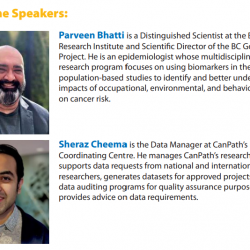
Using CanPath to Support Innovative Health Research  Join our colleagues, Dr. Parveen Bhatti (Scientific Director, BC Generations) and Sheraz Cheema (Data Manager, CanPath) on Wednesday, October 11th to learn about CanPath, types of questions the data can be used to address, and how the data can be accessed. Registration: https://t.co/m8PU92M881  

CanPath Newsletter – Fall 2023

CanPath has released its Fall 2023 newsletter! You can see updates from CanPath and its regional cohorts: CanPath News September 2023 – Nouvelles CanPath septembre 2023 (mailchi.mp). Updates from Atlantic PATH include:  Attending and presenting at the Canadian Society for Epidemiology and Biostatistics (CSEB) Conference held in Halifax in June 2023. CanPath joining the COVID Global Mental Health Consortium that includes 23 international population health cohorts with more than 2.8 million participants! Researchers will work to address critical knowledge gaps related to the impact of policy, psychological and social factors on mental health during the COVID-19 pandemic.”This is an excellent opportunity for CanPath to be involved in such a large international mental health collective,” says Dr. Ellen Sweeney, Director of Research at Atlantic PATH. “We’re very fortunate to have engaged and enthusiastic participants from our regional cohorts, and more than 100,000 participants provided questionnaire data during the COVID-19 pandemic. The work of the COVID Global Mental Health Consortium will be impactful, and we’re thrilled to participate and contribute to this important research.” Atlantic PATH will lead and represent CanPath in this consortium, with analyses for CanPath being conducted in-house by Atlantic PATH’s Data Analyst, Yunsong Cui.   Regional updates including three new publications Congratulations to Dr. Lonneke van Tuijl, Dr. Joost Dekker and team on their new publication with the first results from the Psychosocial Factors and Cancer Incidence (PSY-CA) consortium. This study includes 18 cohorts with more than 300,000 participants, including Atlantic PATH, the Ontario Health Study and CARTaGENE. Congratulations to Dr. Ivan Litvinov, Dr. François Lagacé and the team at McGill University on their new publication from the SunFit project. This study included Atlantic PATH participants and considered why Atlantic Canadians are at higher risk for developing melanoma. Congratulations to Kalli Hood and the team at Dalhousie University on their new publication. Kalli’s Master’s research found an association between a history of cancer and arsenic speciation/metallome exposure in the Atlantic PATH cohort. This work is part of its larger focus on environmental exposure and cancer risk and the use of toenails as an important biomarker.